Ray-Ban Meta Gen 2

At a glance
Three things tell you if it fits
- What it is
Ray-Ban frames with a hands-free camera, open-ear speakers, and voice AI. Nothing digital appears in the lens.
- The need seen in customer reports
Buyers wanted hands-free photos, pet videos, calls and point-of-view documentation.
- Know this first
There is no text, map, message, or photo preview inside the lens.
BUYING REASONS & CUSTOMER EXPERIENCES
Why choose it—and what happened after buying?
We read customer-written experiences for both the buying reason and the catch. Dates, variants and sample sizes appear below.
Ray-Ban Meta Gen 2
The need behind the purchaseBuyers wanted hands-free photos, pet videos, calls and point-of-view documentation.
Amazon U.S. · visible written review cards · 2026-10-22 · 8 written texts
- What worked
- Owners liked video, microphones, everyday styling and easy media import.
- Mixed or qualified experiences
- Heavy recording drained batteries; fit, lens cleaning and night video were tradeoffs.
- Problems and disappointments
- One buyer described battery-saver and missing recording-option problems; another disliked the AI.
Eight U.S. purchase-badged Matte Black/Clear texts, seven Standard and one Large. Reported software causes are not independently diagnosed.
Star distribution and the written sample · 4–5★ 78% / 3★ 6% / 1–2★ 16% · 2026-10-22
The listing’s displayed star distribution
Observed 2026-10-22 · 1,415 global listing ratings
4–5★ 78% · 3★ 6% · 1–2★ 16%
Amazon displayed weighted percentages; options may be pooled. Separate from written-sample stars and text sentiment.Stars in the written sample we read
4–5★ 7 texts · 3★ 0 · 1–2★ 1
This is a selected visible sample, not a representative survey. A high-star text can still describe drawbacks.Open the full guideHow it works · buyer experiences · important limits
Why it sold: the phone stays in your pocket a little longer
It looks like a familiar pair of Ray-Bans, but the frame can capture photos and video from your point of view, play calls and music without earbuds, answer voice questions, and translate supported speech. The important catch is simple: there is no display in the lens.
Meta said the Ray-Ban Meta family had sold millions of units by the time Gen 2 launched. The real appeal is simpler than a futuristic screen: one less reason to reach for a phone. When a child laughs, a dog jumps, or one hand is pulling a suitcase, you can capture the moment, answer a call, or ask a quick question by voice.
The same thing happens at home. You can film a child or pet while staying in the moment, answer a call while cooking, or hear a podcast on a walk. No single feature replaces a phone. Together, they create more moments when the phone can stay in your pocket.
The camera, open-ear sound, and voice AI sit inside glasses that still look like glasses. A moment can be captured or a call answered without reaching for a phone.
On Ray-Ban Meta Gen 2, nothing digital appears. You see the world normally.
Calls, music, AI answers, and supported translation play through speakers near your ears.
The 12 MP camera records the scene from your eye level, up to 3K video on Gen 2.
Five useful things it actually does
Hands-free camera
- What it does
- Say a command or press the frame button to take a photo or start video from your point of view.
- Where it helps
- Children, pets, cooking, cycling stops, travel, and any moment when both hands are occupied.
- Know this first
- Gen 2 has no lens preview. A white capture light turns on, and you still need permission before recording people.
Open-ear sound
- What it does
- Small speakers beside your ears play calls, music, podcasts, translation, and AI answers.
- Where it helps
- You can listen while walking through an airport or cooking without sealing your ears with earbuds.
- Know this first
- Open-ear does not mean private or noise-cancelling. Loud places can make speech harder to hear.
Ask about what you see
- What it does
- The camera gives Meta AI a view of the object, sign, landmark, or ingredients in front of you, then the answer is spoken through the speakers.
- Where it helps
- A landmark on a trip, a foreign label, a plant, or a quick cooking question can be handled without typing.
- Know this first
- AI can misunderstand the scene or give an incorrect answer.
Live conversation translation
- What it does
- You hear the other person's translated speech through the glasses. On display-free Gen 2, your translated reply can be shown to the other person in the phone app.
- Where it helps
- Travel, multilingual families, and short conversations become easier without passing a phone back and forth.
- Know this first
- Meta currently lists 20 online live-translation languages, including Korean and Spanish. Only six languages have offline packs, and the available menu can still depend on the model, market, app, and firmware.
Phone and app connection
- What it does
- The Meta AI app pairs the glasses, imports media, changes settings, and supports several communication and AI features.
- Where it helps
- Photos move to the phone for viewing and sharing, while software updates can add or change features.
- Know this first
- These are not a stand-alone phone. A compatible iPhone or Android phone, Meta account, app, and supported service conditions are required.
It is ordinary eyewear first, technology second.
Clear, sun, prescription, and Transitions lens options work as ordinary eyewear. The camera, microphones, speakers, and touch controls sit in the frame.
Meta said the Ray-Ban Meta family had sold millions of units by the time Gen 2 launched. This product does not ask you to wear a tiny computer screen. It handles a few phone jobs inside a frame that still looks and feels like glasses.
The camera catches moments before the phone comes out.
Press the button on the frame or use a voice command and the 12 MP camera takes an eye-level photo or records up to 3K video. A child runs past, a dog jumps, both hands are busy cooking, or a suitcase is in one hand: those are the moments when the camera makes immediate sense.
There is no viewfinder in the lens, so framing is less exact than holding up a phone. Saved photos and videos move into the Meta AI app for viewing and sharing. Tom's Guide found the better camera and longer battery to be the meaningful Gen 2 upgrades rather than a completely new experience.
The speakers may become the feature you use every day.
Small speakers point sound toward your ears without sealing them. They handle calls, music, podcasts, AI answers, and translation while you can still hear an airport announcement, a child nearby, or traffic around you.
Open-ear audio is not noise cancelling, and it is not perfectly private. In a loud street the answer may be harder to hear; in a quiet room someone standing close may hear a little. Think of it as convenient everyday audio, not a replacement for good headphones in every situation.
Ask Meta AI by voice
You can ask about a sign, landmark, plant, ingredient, or other object in front of you. The glasses send a camera image for AI processing, then the answer comes back through the speakers. Timers, reminders, calls, messages, and media controls can also be handled by voice when the feature and service are supported.
AI can misidentify an object or give a wrong answer. The camera supplies context for a spoken response; it does not establish the response’s accuracy.
Translation is heard in the glasses and checked on the phone.
During a supported conversation, the other person's translated speech plays through the open-ear speakers. The Meta AI app can show the translated text, and downloaded language packs can keep supported translation working when the connection is poor or unavailable. It is useful for travel and everyday conversation, not a substitute for a professional interpreter where every word matters.
Meta's current help page lists 20 live-translation languages when the glasses are online, including Korean and Spanish. Offline packs are currently limited to English, Spanish, French, Italian, Portuguese, and German. The model, market, Meta AI app, and current firmware can still affect what appears in the language menu.
The glasses work with a phone, not instead of one.
First setup needs a compatible iPhone or Android phone, the Meta AI app, a Meta account, and internet access. After setup, the frame can still capture saved photos and video, but importing, sharing, updates, most AI features, calls, and translation depend on the phone, app, account, connection, or supported service.
Ray-Ban lists up to eight hours for moderate Gen 2 use and up to five hours with continuous audio and voice assistance. Real use changes with recording, calls, volume, AI, temperature, and connection. The case recharges the glasses between uses, so the practical habit is the same as wireless earbuds: put them back in the case.
Camera use and recording consent
A front light signals saved photo and video capture. Ray-Ban's FAQ also says newer models can use the camera for camera-based AI scene analysis without that light because the image is not being saved as shareable media. The distinction is easy to miss. A light never replaces asking before recording people, and a camera on your face may still make others uncomfortable.
Gen 2 combines first-person photos, calls, music, and voice help. Camera-free Solos AirGo A5 concentrates on audio. The separate Meta Ray-Ban Display adds visual information inside one lens.
Who this pair fits
Creators, parents, pet owners, travelers, and people who already wear glasses have the clearest use for Gen 2. It is useful when first-person capture, open-ear calls, music, and quick voice help matter more than seeing text in the lens.
Meta Ray-Ban Display is the separate model that shows messages, maps, translated captions, and photo previews in the lens. Solos AirGo A5 focuses on audio and app-based translation, without a camera or lens display.
Models to compare
Camera, lens display, or audio: three different designs
EVERYDAY CAMERA + AUDIO
Ray-Ban Meta Gen 2
Wayfarer · Matte Black · Clear lensesRay-Ban frames with a hands-free camera, open-ear speakers, and voice AI. Nothing digital appears in the lens.
You want to capture children, pets, trips, cooking, or everyday moments without putting a phone between you and the moment.
See details · features, conditions and sources
Observations from a published review or test
Tom's Guide found the longer battery life and improved camera to be the meaningful Gen 2 upgrades, and found hands-free child and pet photos especially natural to capture.
The same review called the overall upgrade modest and noted that the glasses still do not provide turn-by-turn directions in the lens.
Key features
- What you see
- The real world only; there is no lens display
- Photo and video
- 12 MP photos; video up to 3K at 30 frames per second
- Sound
- Two open-ear speakers for calls, music, translation, and AI answers
- Battery
- Maker claim: up to 8 hours of moderate use or 5 hours of continuous audio and voice; the case provides additional charges
Before you buy
- There is no text, map, message, or photo preview inside the lens.
- Meta's current help page lists 20 live-translation languages when the glasses are online, including Korean and Spanish. Offline language packs are limited to English, Spanish, French, Italian, Portuguese, and German. Availability can still depend on the model, market, Meta AI app, and current firmware.
- Setup and several features require a compatible phone, the Meta AI app, a Meta account, and supported internet, country, and language conditions.
- The front light signals saved photos and video, but Ray-Ban says newer models may use the camera for AI scene analysis without it. A light never replaces asking before recording.
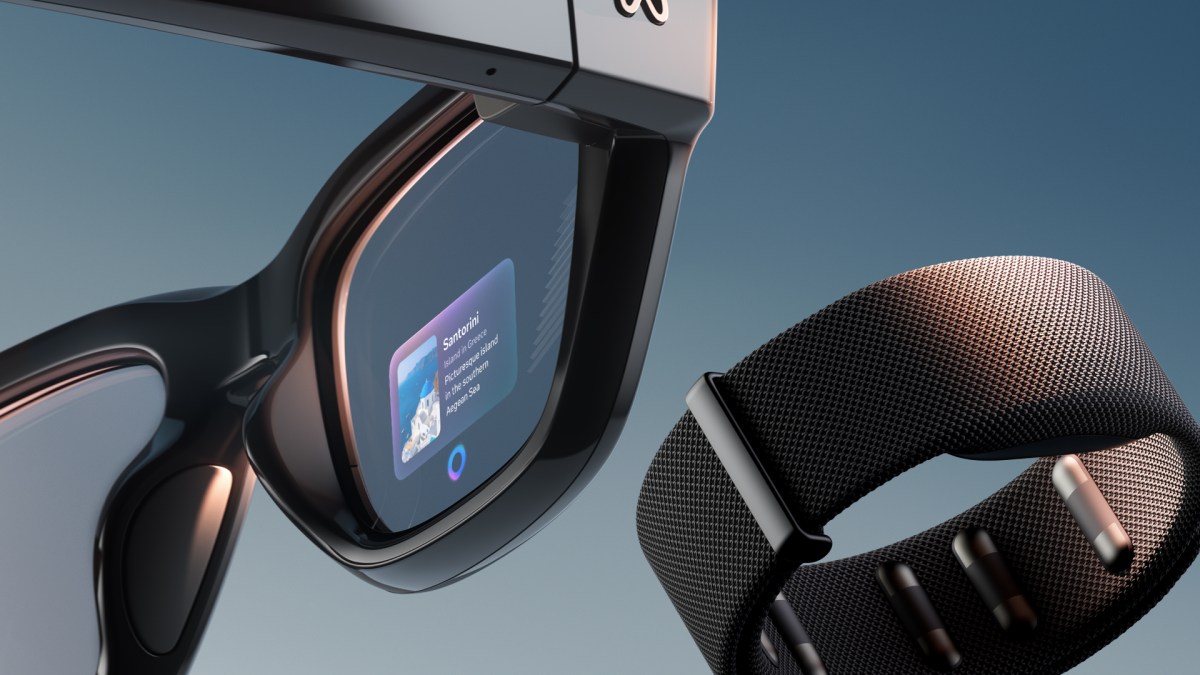
TEXT, MAPS, AND PREVIEWS IN ONE LENS
Meta Ray-Ban Display
Display glasses + Meta Neural BandThis is the Meta model that can show messages, walking directions, translated captions, and photo previews in the right lens.
You truly need visual information without pulling out a phone and are willing to wear the included wrist controller.
See details · features, conditions and sources
Key features
- Lens display
- 600 × 600 full-color display in the right lens only
- What it shows
- Messages, walking directions, translation captions, AI answers, and photo previews
- How you control it
- Voice, touch, and the included Neural Band that reads small hand-muscle signals
- Battery
- Maker claim: up to 6 hours per charge; the fully charged case adds up to 24 hours
Before you buy
- The display sits in one corner of one lens. It is not a full two-eye movie screen or a virtual-reality headset.
- The glasses weigh 68 g in the standard size, and the wristband is part of the product experience.
- Meta offers in-person demonstrations and fitting for the glasses-and-band set.
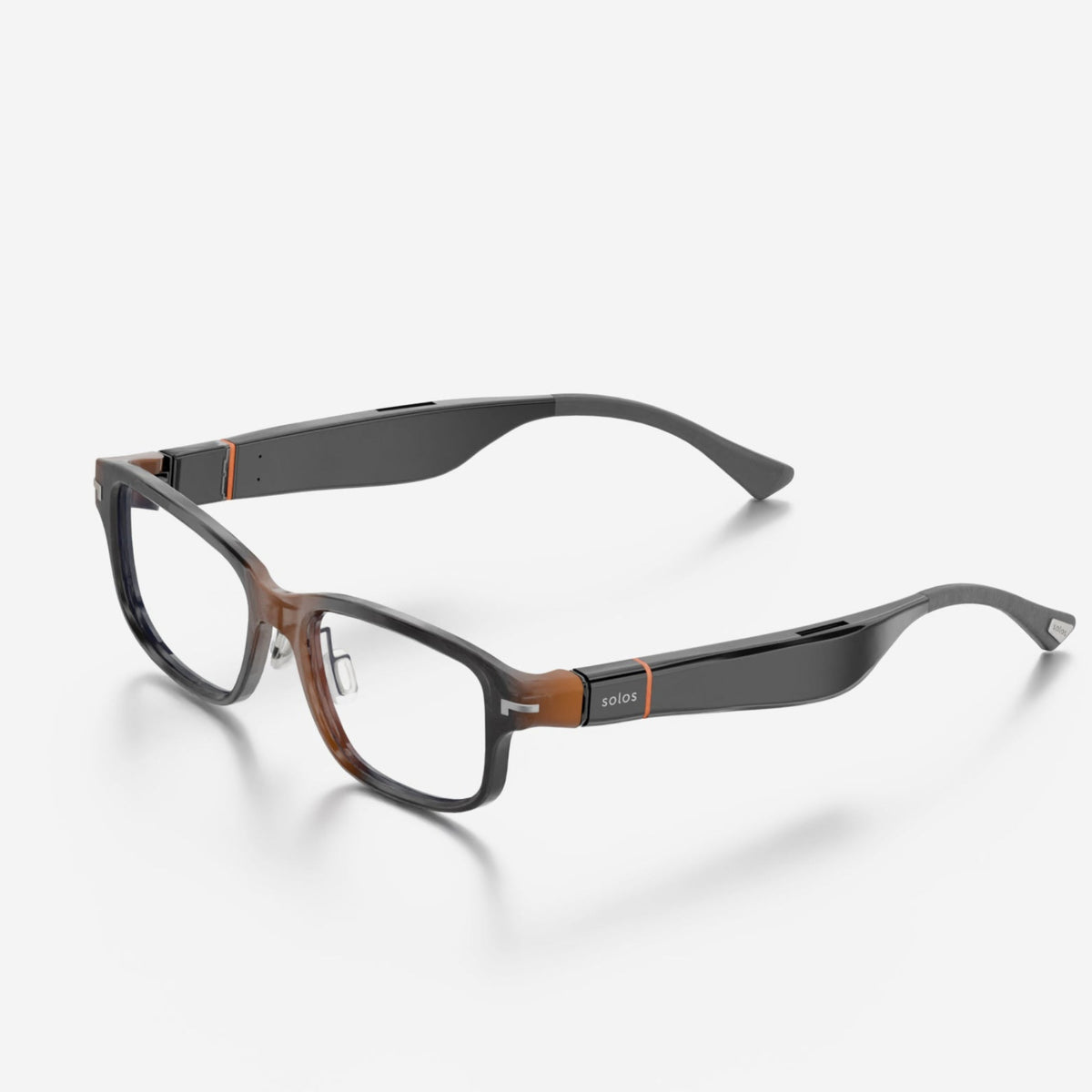
NO CAMERA · AUDIO AND TRANSLATION
Solos AirGo A5
Hydro 7 · Shiny Black · Blue-light lensesA camera-free, audio-first alternative for calls, music, voice AI, and app-based translation.
You want open-ear audio and voice help but do not want to wear a camera in public.
See details · features, conditions and sources
Key features
- Camera
- None on this exact Hydro 7 A5 model
- Lens display
- None; answers and translation are heard through speakers
- Battery
- Maker claim: about 10 hours of music or 7 hours of calls
- Weight and water
- About 36 g; IP54 splash resistance
Before you buy
- It cannot take photos or video and cannot show text or maps in the lens.
- Translation and AI depend on the Solos phone app and its current supported languages and services.
- This Hydro 7 A5 has no camera; other Solos frames and temples can have different hardware.
What should we look at next?



Sources
- Exact Ray-Ban Meta Gen 2 Wayfarer specifications
- Meta's official Gen 2 launch and sales statement
- Meta U.S. live-translation language guide
- Official Meta Korean live-translation update
- Official Ray-Ban Meta phone, app, battery, and capture-light FAQ
- Official Meta Ray-Ban Display specifications
- Official Solos AirGo A5 specifications
- Tom's Guide Gen 2 long-use review
- Engadget Gen 2 review, including translation battery use
- Condé Nast Traveller travel-use review
As an Amazon Associate, we earn from qualifying purchases.
Amazon and the Amazon logo are trademarks of Amazon.com, Inc. or its affiliates.